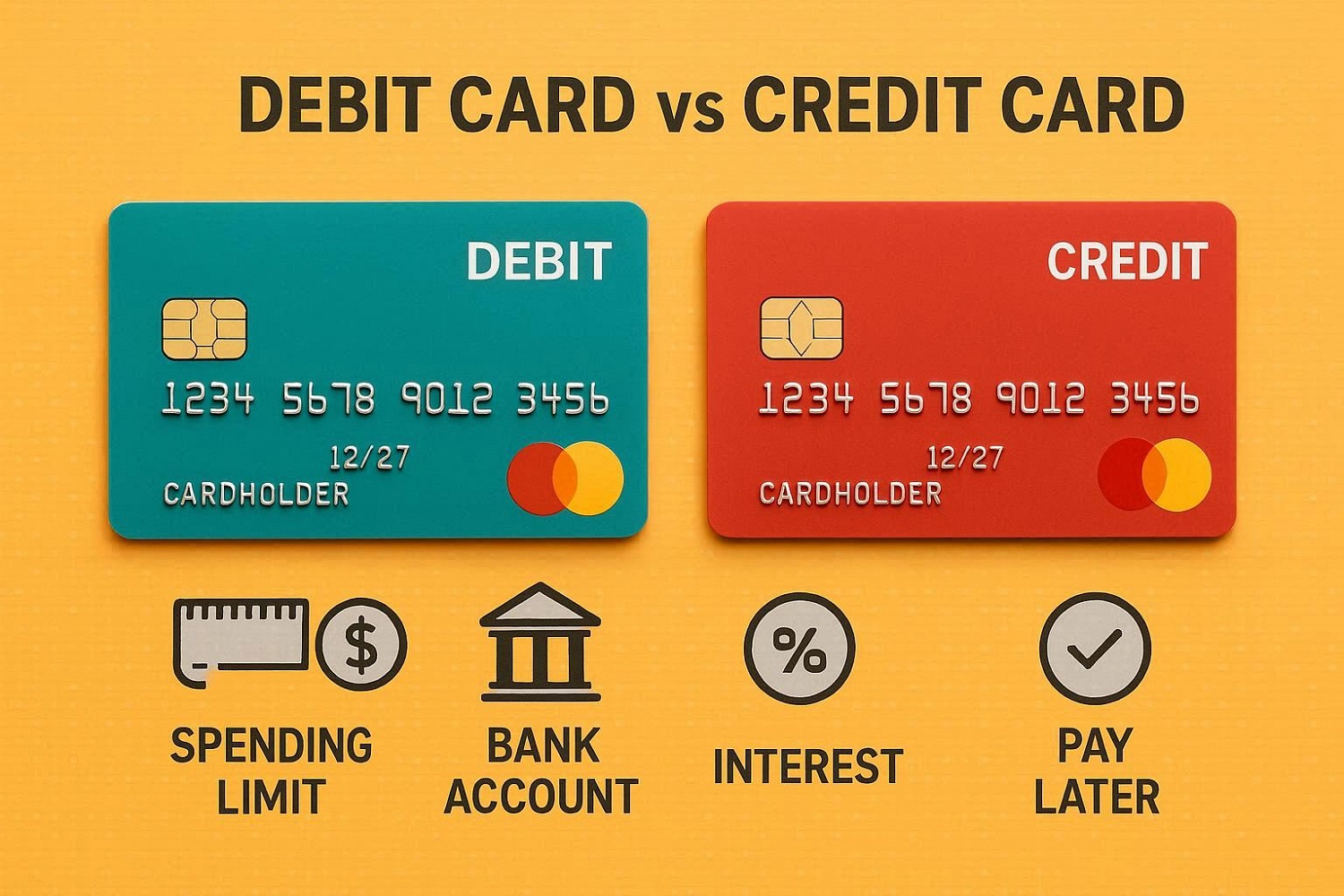
The increasing habit of embracing digital payment systems has unlocked a serious discussion about the difference between debit cards and credit cards. And people who are serious about managing personal finances are the ones who want to understand this difference.
It is true that both cards look similar, and users use them for shopping. However, they function very differently regarding how the required money is accessed and managed.
How Debit Cards Work
A debit card is directly linked to your bank account. And, when you make a payment using a debit card, the amount is instantly deducted from your available balance. That means you can spend only what you already have.
Now, it is very common to see debit cards are often used for ATM withdrawals, bill payments, and everyday purchases. The important part is these cards help users to maintain spending discipline because there is no question of borrowing the required amount from any bank or person. Yes, you can spend from what you already have.
How Credit Cards Work
If you understand how credit cards operate, you can understand the difference between debit cards and credit cards.
A credit card allows you to borrow money up to a certain pre-approved limit from the assigned bank. Moreover, you don’t have to pay that borrowed amount immediately. Your spending is billed monthly. That means there is no immediate deduction.
But you must be conscious about paying the due amount in time. If you pay the full amount within the due date, no interest will be charged. However, some users pay a hefty interest when they fail to pay the due amount on time.
One Prime Difference Between Debit Cards and Credit Cards Lies in Spending Control
One major difference between debit cards and credit cards is spending control.
Debit cards restrict you from unnecessary spending. Yes, they limit you to your bank balance. And this restriction makes debit cards safer for budgeting.
On the other hand, credit cards offer flexibility but, at the same time, unlock the door for overspending if not used carefully. This is undeniably a big reason why financial discipline is more important when you choose to use credit cards.
Rewards, Benefits, and Costs Unlock Another Key Difference Between Debit Cards and Credit Cards
Every person likes to enjoy rewards and benefits. Interestingly, a significant key difference between debit cards and credit cards lies in several benefits.
Credit cards often provide some very popular rewards such as cashback, reward points, and travel perks. Furthermore, they provide purchase protection.
On the contrary, debit cards usually offer fewer rewards, but they often include basic benefits like discounts or offers.
However, things become different in terms of costs. This time debit cards generally have minimal charges. But credit cards often come with annual fees, interest charges, and penalties if users make delayed payments. Nonetheless, the benefits of a credit card can outweigh these costs if a user uses it responsibly.
Impact on Credit Score: A Notable Difference Between Debit Cards and Credit Cards is the
There is a significant difference between debit cards and credit cards regarding their impact on your financial profile.
One simple fact is debit card usage does not affect your credit score. But credit cards play a major role in building or damaging your credit history depending on how you manage your due payments.
Which One Should You Use?
Which card you should choose completely depends on your financial habits. If you maintain controlled spending and simplicity, then a debit card is undeniably a good choice.
But, if you want rewards and flexibility and aim to build a credit score, then a credit card can be a better choice.
Final Thoughts
The difference between debit cards and credit cards does not mean only different payment modes. Choosing any one of them indicates your financial discipline, costs, and long-term credit health.
Now, understanding these differences will help you to perceive how to use both cards wisely. Also, knowing the differences can help you to make better financial decisions.