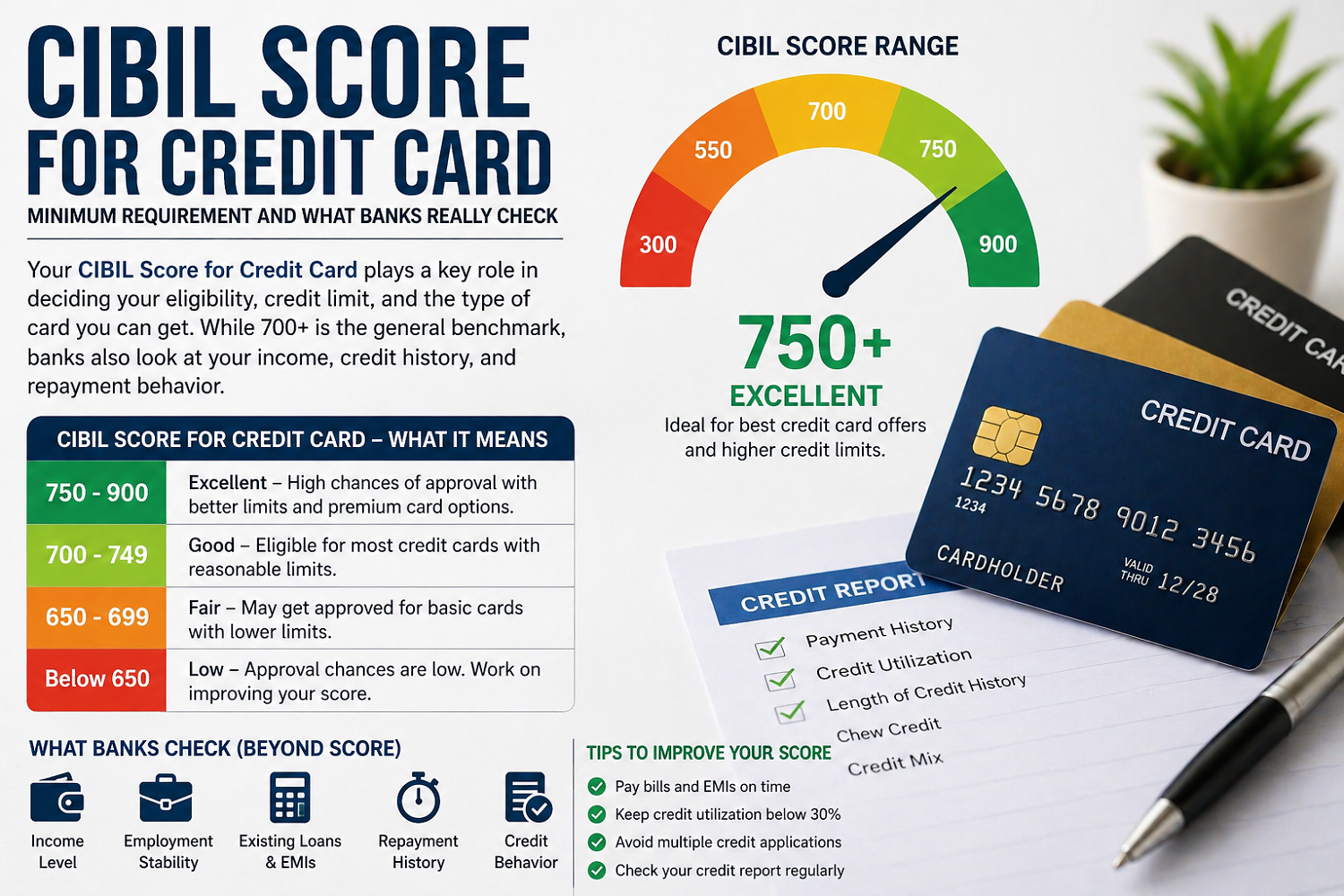
A CIBIL score for credit card approval is very essential. This score is one of the first salient features that lenders look at when you apply for the credit card. However, it is true that the CIBIL score is not the only factor that decides approval.
Most card-issuing authorities rely on your score to measure repayment potentiality in India. Although, they also consider your income and job stability, as well as existing obligations, if any, before issuing a card.
What Is the Minimum Score Typically Needed?
The CIBIL score for credit card approval is usually expected to be 700 or above for a standard, unsecured card.
Applicants who can secure the 750+ range often have a smoother and easier approval experience. Even they may qualify for better limits or premium variants.
Some issuers even provide approval with a score between 650 and 700. But they often follow some stricter termsfor entry-level cards with lower limits.
Several instances are available that reveal if your score is below 650 or you have little or no credit history, then banks may decline a regular card.
Now, in such cases, credit cards are often issued with secured options, i.e., against a fixed deposit. No doubt, this allows you to start building a track record.
CIBIL Score Alone Isn’t Enough for Credit Card Approval
Now, here comes a crucial truth. A CIBIL score is definitely important for having a credit card. But a solid score can’t alone guarantee the card’s approval.
Apart from the score, lenders also assess your income level, employment type, whether you are salaried or self-employed, and debt-to-income ratio. For example, a high CIBIL score paired with heavy existing EMIs may result in rejection.
Furthermore, banks check recent credit activity. Even multiple applications within a short period can signal risk. They may diminish your chances, regardless of your score.
The Difference Between Entry-Level and Premium Cards
The CIBIL score for the credit card requirements can vary as per the card category. For example, the entry-level cards often become accessible with CIBIL scores around 650–700. Notably, these cards often focus on basic cashback or rewards.
Mid-tier cards need scores between 700 and 750 for approval. These cards offer better rewards as well as occasional travel benefits.
The premium cards usually require a 750+ score along with two other important criteria, i.e., a higher income and a clean repayment history.
Now, it is very important to understand which card is the best for your requirements. In short, choosing the right tier matters most. One crucial fact is if you apply for a premium card with a borderline score, then, most probably, it can lead to rejection.
Therefore, starting with a simpler card is better, as it can help you build eligibility over time.
What If You Don’t Have a Score?
If you do not have any previous experience and are absolutely new to credit card usage, then there is a high probability that you may not have a CIBIL score for credit card evaluation yet.
Now, in that case, issuers often minutely observe and evaluate your income proofs and banking history. Remember, a secured card or a low-limit starter card always helps you create your first credit record. And this record gradually turns into a measurable score.
Practical Ways to Improve Eligibility
If your current CIBIL score for credit card approval is not up to the mark, then try focusing on consistent improvements.
Now, the question is how you can make those improvements. First of all, pay all dues on time.Next, always try your best to keep card usage within a reasonable portion of your limit. And make sure to avoid applying for multiple products at once.
These habits must ensure that your score surely moves into a stronger range over a few months.
Conclusion
The CIBIL score for a credit card is indeed a key entry point, but the reality is approval more depends on a broader profile.
So, aim for a score above 700. Then apply for cards that match your current standing, and once you get the approval, build your score gradually.
Disciplined, conscious usage and willingness to make timely repayments can help you to move from a basic cardholder to a premium one better without facing unnecessary rejections.