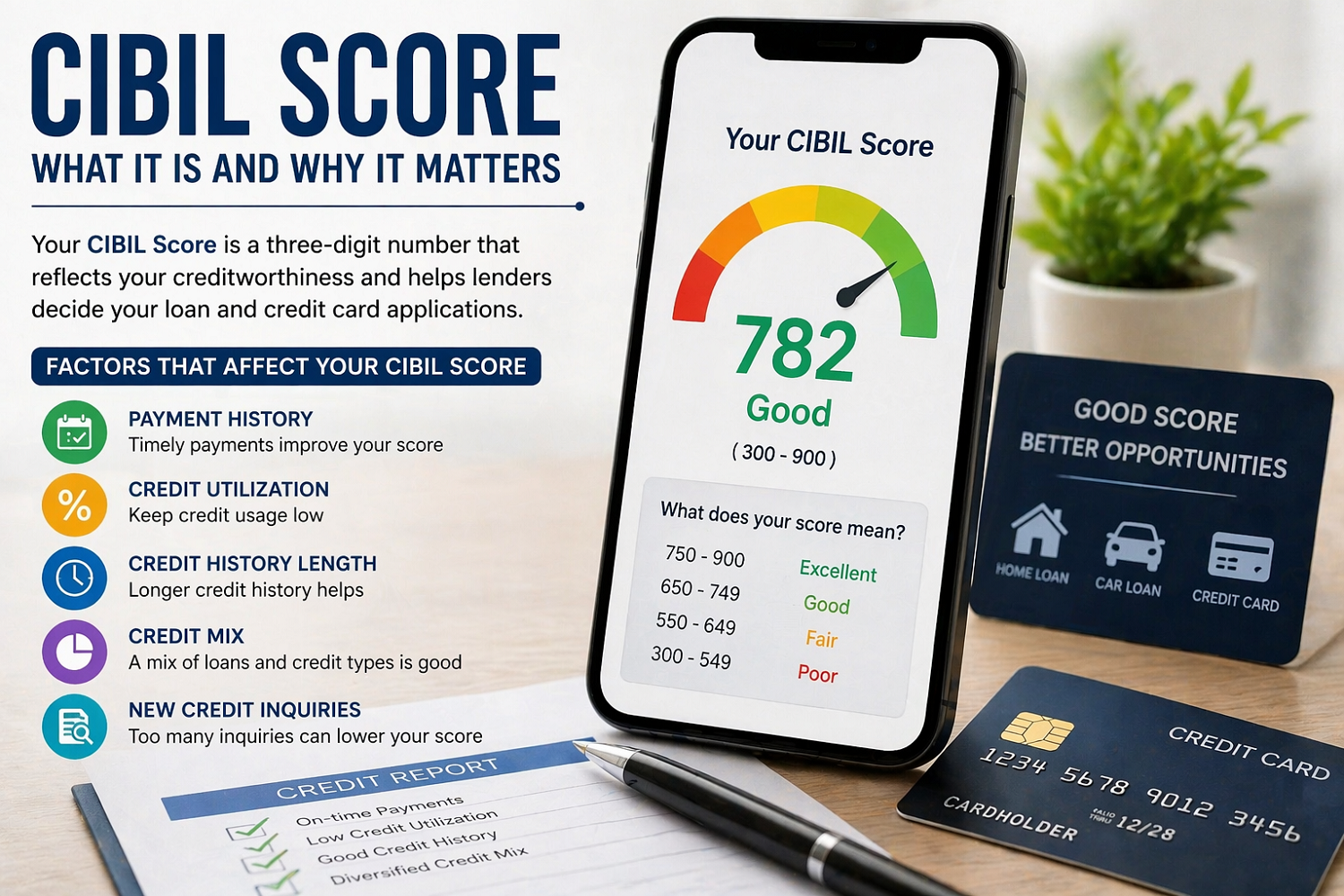
Nowadays, the term “CIBIL score” is very popular. If you have bank accounts and you use credit cards, then your message inbox often gets flooded with messages regarding this CIBIL score. However, very few people know what this term exactly means.
A CIBIL score is a three-digit number. It reflects your creditworthiness and simultaneously plays a notable role in determining whether lenders are ready to approve your loan or your credit card application.
Significantly, this score is issued by TransUnion CIBIL. This score typically ranges from 300 to 900. Moreover, a higher score indicates better credit health.
What does a CIBIL Score Actually Mean?
A CIBIL score is calculated based on your credit history. And your credit history includes your borrowing and repayment behaviour. In short, whenever you take a loan or use a credit card, your activity is recorded in your credit report.
Now, this data is used to generate your score. The important part is when a score is above 750, it is generally considered ‘strong’. Also, such a strong score increases your chances of getting loans at better interest rates.
How Your CIBIL Score Is Calculated
There are several important factors that influence your CIBIL score. The most important one is your payment history. It involves reports about whether you pay your EMIs and credit card bills on time.
Credit utilisation is another key factor. It refers to how much of your available credit limit you are using. And a high utilisation ratio can hamper your score.
The length of your credit history is also essential. It plays a significant role in calculating your CIBIL score. Older credit accounts with a good repayment track record always improve your score.
In addition, a balanced mix of secured and unsecured loans can also positively affect your credit profile. Here ‘secured loans’ mean home loans and like others. And ‘unsecured loans’ mean personal loans and the like.
Why CIBIL Score Matters
The importance of a CIBIL score is not only limited to loan approvals. Banks and financial institutions use this score in order to assess the risk of lending money to you.
A high score, on the one hand, increases approval chances, and, on the other hand, it may help you negotiate lower interest rates and higher credit limits.
On the contrary, a low CIBIL score can lead to loan rejections or may provide approvals with stricter terms. In some cases, it may even negatively impact your ability to rent a house or get certain financial services.
How to Improve Your CIBIL Score
There is no denying that, like other platforms, you need to maintain consistent financial discipline in order to improve your CIBIL score. And paying all dues on time is the most effective step to maintain that consistency.
It is essential to know that keeping your credit card usage below 30–40% of your limit also helps maintain a healthy score.
Furthermore, you should avoid applying for multiple loans or credit cards within a short period because frequent inquiries may decrease your score. It is also a good practice to check credit reports regularly. It helps you detect errors and gives you the scope to report immediately if discrepancies are found.
Conclusion
It is essential that you should understand your CIBIL score rightly, because it helps you to rightly manage your financial future. Also, it acts as a financial reputation that lenders often rely on while making finance-related decisions.
You must understand one simple thing: if you maintain good credit habits and monitor your score regularly, then you can ensure better access to loans and lower interest rates. And this over time provides you much stronger financial stability.